The EU Textile EPR Directive: What It Means for Collection Operators
The EU's new Extended Producer Responsibility directive for textiles is now law. Here's what it requires, when it takes effect, and what it means for textile collection companies.
Plutou Team
5 min read
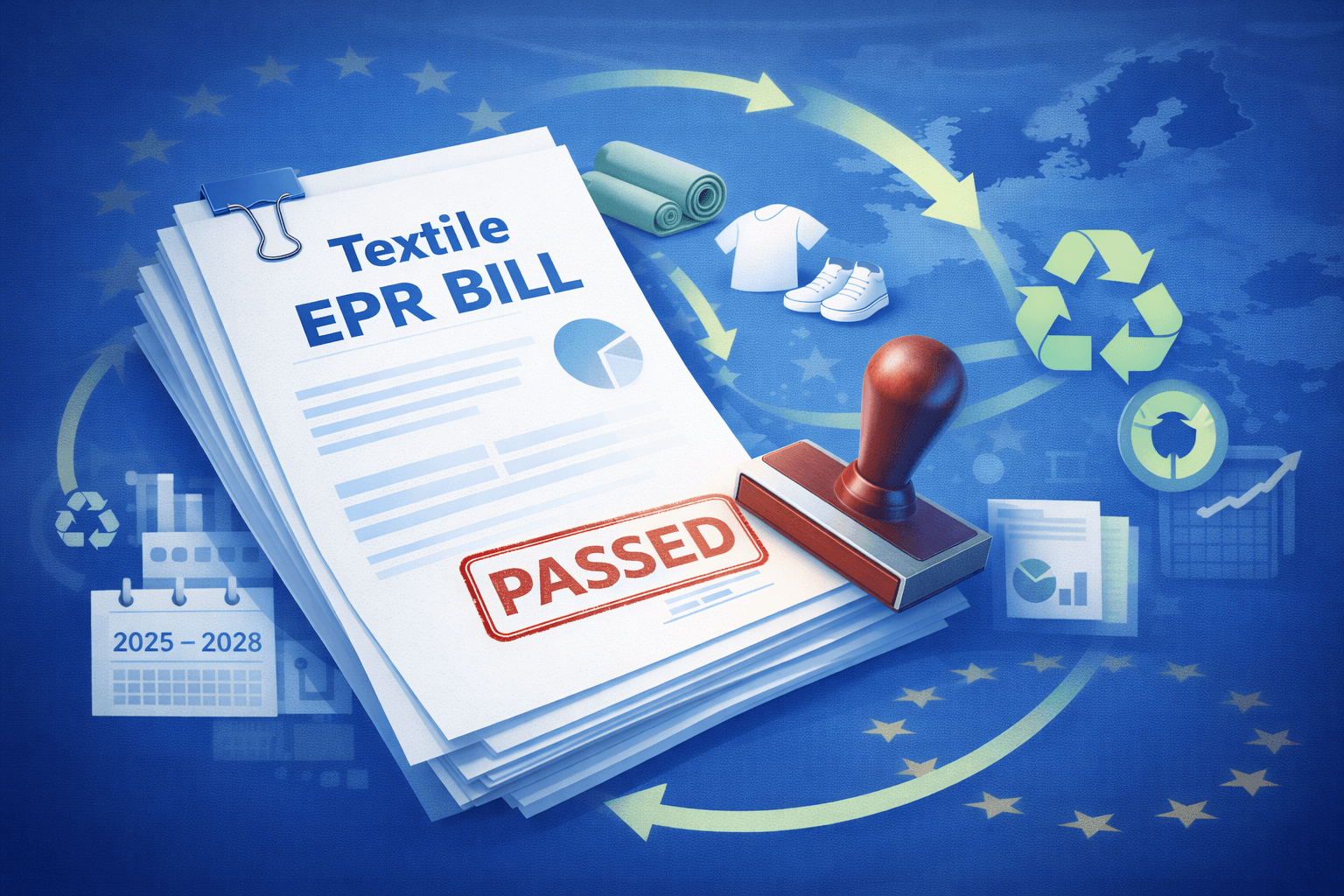
In October 2025, the EU's revised Waste Framework Directive officially entered into force. It includes mandatory Extended Producer Responsibility (EPR) schemes for textiles and footwear across all EU member states.
This is the biggest regulatory shift the textile collection industry has seen in decades. Here's what it means.
What Is EPR for Textiles?
Extended Producer Responsibility is simple in concept: the companies that make and sell textile products are now financially responsible for what happens to those products at end of life.
That means clothing brands, footwear manufacturers, and retailers placing products on the EU market must fund the full cost of:
- Separate collection of used textiles
- Sorting for reuse and recycling
- Recycling and residual waste management
- Consumer education about textile disposal
- Data collection and reporting on recovery rates
This applies to all producers selling into the EU — including e-commerce sellers — regardless of where they're based.
What Products Are Covered?
The directive covers a broad range of textile goods:
- Clothing and accessories
- Footwear
- Hats and headwear
- Blankets and bed linen
- Kitchen linen
- Curtains
Member states can also choose to extend EPR to mattress producers.
The Timeline
The directive is law, but implementation rolls out in stages:
| Milestone | Date |
|---|---|
| Directive enters into force | October 2025 |
| Member states transpose into national law | June 2027 |
| Producer Responsibility Organisations (PROs) operational | April 2028 |
| Micro-enterprise compliance deadline | April 2029 |
Each EU member state will set up its own national EPR scheme. There is no single EU-wide system — collection operators will need to work within their country's specific framework.
What This Means for Textile Collectors
If you run a textile collection operation in Europe, this directive changes the economics and structure of your business in several important ways.
Funded Collection Infrastructure
EPR fees paid by producers will flow downstream to fund collection operations. This means collection companies, sorting facilities, and recyclers will have their activities financially supported through Producer Responsibility Organisations rather than operating solely on resale revenue.
Data and Reporting Requirements
Collection operators will need to track quantities by weight, maintain inventories, and report collection and recycling KPIs to national authorities. Paper-based tracking won't cut it. You'll need systems that capture data at every stop.
Protection for Social Economy Actors
The directive explicitly protects charity and reuse operators. PROs cannot exclude social economy actors from collection and sorting systems. Nonprofits like Humana People to People, Goodwill, and charity-affiliated collectors are integrated into the framework by design.
Consistent Waste Classification
All separately collected textiles are now uniformly classified as waste across member states. Textiles must be sorted before shipment — no more labeling unsorted goods as "reusable" to bypass regulations.
Eco-Modulated Fees
EPR fees will be adjusted based on product sustainability — durability, recyclability, recycled content. This incentivizes brands to design more circular products, which over time affects the quality and composition of what collectors receive.
Why This Matters Beyond Europe
The EU is setting the template. U.S. states are already watching and drafting their own textile EPR legislation. California passed SB 707 in 2024 and selected Landbell USA as its PRO in 2026 — the first statewide textile EPR law in the U.S. New York and others have introduced or are considering similar bills. The same pattern played out with packaging EPR — Europe led, and North American jurisdictions followed.
For collection operators in the U.S., the EU directive is a preview of what's coming. The companies that build data-driven, scalable operations now will be ready when domestic regulations arrive.
What Operators Should Do Now
Whether you're in Europe preparing for compliance or in North America watching the trend:
- Get your data house in order — You'll need weight-based tracking, collection KPIs, and auditable records. Spreadsheets won't satisfy regulatory reporting.
- Understand your national framework — Each EU country will implement differently. Stay connected with your national waste authority and industry associations.
- Invest in software — Route optimization, container tracking, and driver apps aren't nice-to-haves anymore. They're infrastructure for compliance.
- Build relationships with PROs — As Producer Responsibility Organisations stand up, collection operators need to be at the table.
Plutou Helps You Stay Ahead
Plutou gives textile collectors the operational tools and data infrastructure to meet what's coming — whether that's EU compliance today or U.S. regulation tomorrow.
- Weight and volume tracking at every stop
- Location performance analytics for reporting
- Route optimization that scales with growing collection networks
- Digital records that replace paper-based tracking
The regulatory landscape is shifting. The operators with real data and efficient operations will be the ones that thrive. See how Plutou supports textile collection operators.